Showing posts with label Mathematicians and Scientists. Show all posts

Monday, April 27, 2026

Top Italian Mathematicians


  1. Fibonacci (Leonardo of Pisa, c. 1170–1240)
    Often regarded as the most influential medieval European mathematician. He introduced the Hindu-Arabic numeral system (including zero) to the Western world in his book Liber Abaci, revolutionizing commerce, science, and calculation. He is best known for the Fibonacci sequence (0, 1, 1, 2, 3, 5, 8, ...), which appears in nature, art, and modern applications like computer algorithms and biology.
    Also see: Fibonacci Day, Speed Limits, The Creator
    (Image: By Hans-Peter Postel - Own work, CC BY 2.5, https://commons.wikimedia.org/w/index.php?curid=1739679)


  2. Joseph-Louis Lagrange (Giuseppe Luigi Lagrangia, 1736–1813)
    A towering figure in mathematical analysis, celestial mechanics, and number theory. Born in Turin (then part of the Kingdom of Sardinia), he worked extensively in France and is considered one of the greatest mathematicians of the 18th century. Key contributions include Lagrangian mechanics (foundational to classical physics), the Lagrange multiplier method in optimization, and major advances in algebra and the calculus of variations. He is frequently ranked among the top Italians in historical popularity indices.
    (Image: Public Domain - https://commons.wikimedia.org/wiki/File:Lagrange_crop.jpg)

  3. Gerolamo Cardano (1501–1576)
    A Renaissance polymath whose Ars Magna (1545) was the first major Latin treatise on algebra, introducing solutions to cubic and quartic equations (building on earlier Italian work by del Ferro, Tartaglia, and Ferrari). He also made pioneering contributions to probability theory and is noted for his broad influence on mathematics, medicine, and philosophy during the Italian Renaissance.
    (Image: Ginko Edizioni)


  4. Galileo Galilei (1564–1642)
    While primarily remembered as a physicist and astronomer, Galileo was a profound mathematician who applied rigorous mathematical methods to the study of motion, falling bodies, and kinematics—laying groundwork for modern physics and the scientific method. His work on geometry, proportions, and experimental mathematics bridged the Renaissance and the Scientific Revolution. Many lists of great Italian mathematicians include him for his mathematical innovations in mechanics.
    (Image: Public Domain - https://en.wikipedia.org/wiki/Galileo_Galilei#/media/File:Galileo_Galilei_(1564-1642)_RMG_BHC2700.tiff)


  5. Vito Volterra (1860–1940) 
    Vito Volterra is renowned for his work in functional analysis (integral equations, Volterra operators) and mathematical biology (predator-prey models, now foundational in ecology).

    (Image: By Unknown author - http://www.phys.uniroma1.it/DipWeb/dottorato/SCUO_VOLTERRA/scuola_volterra.html, Public Domain, https://commons.wikimedia.org/w/index.php?curid=16117839 )

Other Notable Mentions

  • Luca Pacioli (c. 1447–1517): "Father of accounting" and popularizer of double-entry bookkeeping; collaborator with Leonardo da Vinci.
  • Bonaventura Cavalieri and Evangelista Torricelli: 17th-century pioneers in indivisibles and early calculus ideas.
  • Scipione del Ferro, Niccolò Tartaglia, and Lodovico Ferrari: Solved cubic and quartic equations in the Renaissance.
  • Maria Gaetana Agnesi (1718–1799): Early female mathematician known for the "witch of Agnesi" curve and comprehensive calculus text.
  • Gregorio Ricci-Curbastro developed the tensor calculus (with Tullio Levi-Civita), which became essential for Einstein's general relativity and differential geometry. Other strong contenders for this spot include Giuseppe Peano (axiomatization of natural numbers and mathematical logic) and Ennio de Giorgi or Enrico Bombieri (Fields Medalist) for more modern contributions.

Modern-era figures like Enrico Bombieri (Fields Medal 1974) and Eugenio Calabi also rank highly in specialized fields but are less "all-time" dominant than the historical giants. Other current figures include:

  • Alfio Quarteroni (born May 30, 1952, in Ripalta Cremasca, Italy) is a prominent Italian mathematician specializing in numerical analysis, scientific computing, and mathematical modeling.
  • Professor Piergiorgio Odifreddi (born 1950 in Cuneo, Italy) is an Italian mathematician, logician, and popular science writer specializing in mathematical logic, recursion theory (computability theory), and the foundations of mathematics. He is Professor Emeritus of Mathematical Logic at the University of Turin, where he taught for many years, and has held visiting positions at institutions such as Cornell University and the University of California, Berkeley.
  • Professor Roberto Renò (born in Italy) is an Italian mathematician and quantitative finance expert specializing in financial econometrics, volatility modeling, asset pricing, and statistical methods for financial markets. He holds a PhD in Financial Mathematics from the Scuola Normale Superiore in Pisa (2005, magna cum laude) and a degree in Physics from the University of Pisa.

Thursday, November 27, 2025

Columbian Mathematicians

(Fedrico Ardila - Image: QuietSisyphus)


Colombia may be best known for coffee, emeralds, and magical realism, but it has quietly produced some extraordinary mathematicians. Federico Ardila (combinatorics rockstar, MIT PhD, mentor to dozens of underrepresented students), Antanas Mockus (the mayor who used game theory to transform Bogotá), José Fernando Escobar, known for his work on the Yamabe problem, and many more. Proof that a country of 50 million people can punch way above its weight in pure and applied math.

Friday, July 18, 2025

Top Five Dutch Mathematicians


Identifying the top five Dutch mathematicians involves evaluating their contributions to mathematics, focusing on impact, innovation, and recognition within the field. The Netherlands has a rich mathematical tradition, producing scholars whose work has shaped various areas of mathematics. Based on historical significance, influence, and contributions, the following are five Dutch mathematicians who could be considered among the top, presented in no strict order of ranking due to the subjective nature of "top" and the diverse areas of their work.


Top Five Dutch Mathematicians


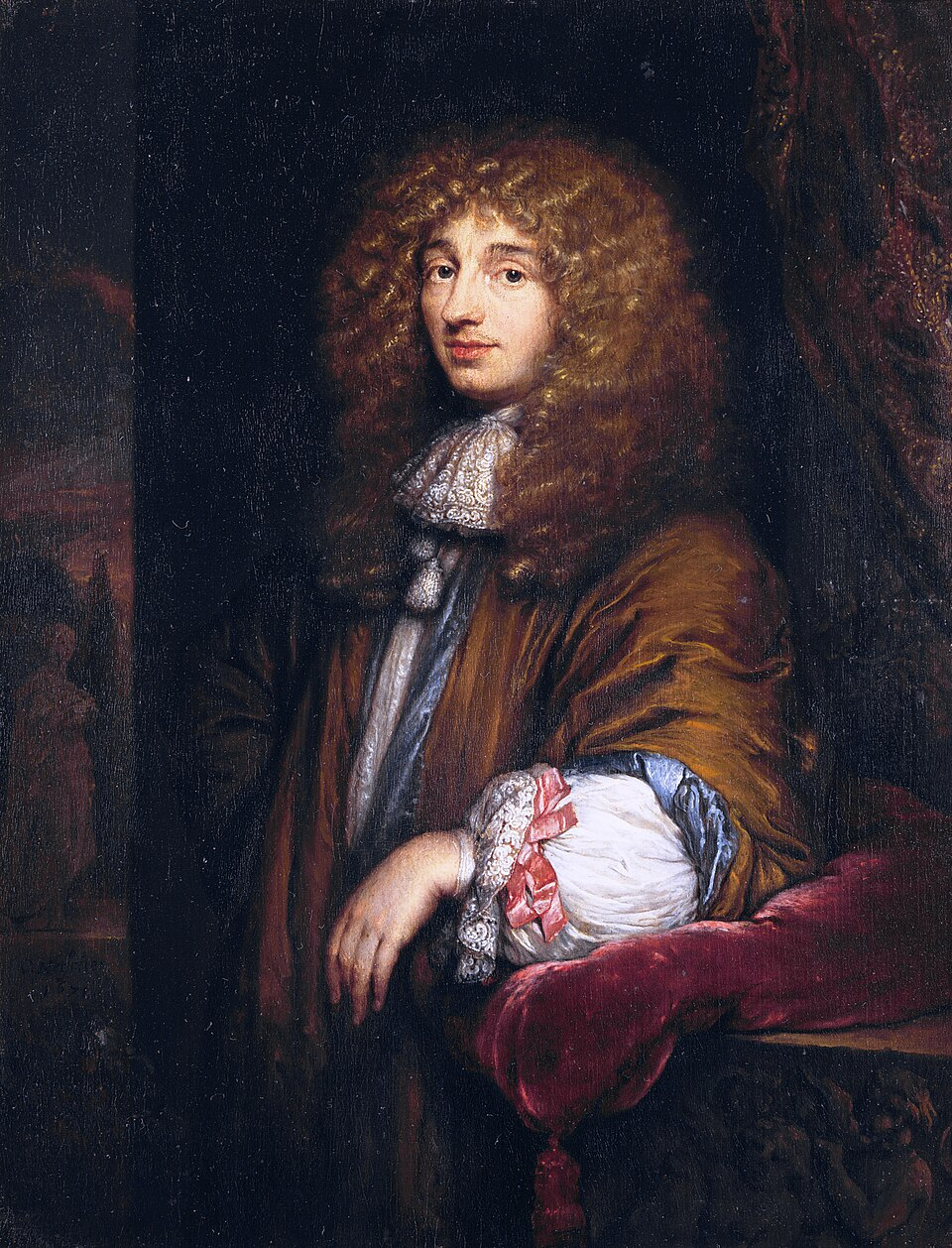
1. Christiaan Huygens (1629–1695)

Contributions: Huygens was a polymath whose mathematical work significantly advanced geometry, probability, and applied mathematics. He developed the wave theory of light, which involved mathematical modeling of wave propagation, and made foundational contributions to probability theory through his work on games of chance, including the concept of expected value in De Ratiociniis in Ludo Aleae (1657). He also improved methods for calculating the areas of curves and surfaces, contributing to early calculus. His work on the pendulum clock involved mathematical analysis of periodic motion, impacting physics and mathematics.  

Significance: Huygens is considered a pioneer in probability and a key figure in the Scientific Revolution. His mathematical insights bridged theory and application, influencing later developments in calculus and physics.  

Why Included: His foundational work in probability and geometry, combined with his international influence, makes him a standout Dutch mathematician.

https://en.wikipedia.org/wiki/Christiaan_Huygens


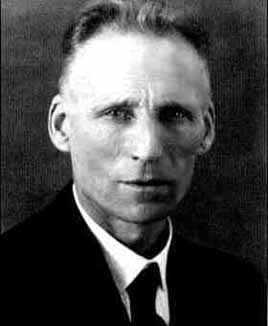
2. Luitzen Egbertus Jan Brouwer (1881–1966)

Contributions**: Brouwer founded intuitionism, a philosophy of mathematics emphasizing constructive proofs over classical logic. He developed key results in topology, including the Brouwer Fixed-Point Theorem, which states that any continuous function from an \( n \)-dimensional closed ball to itself has a fixed point. His work on the foundations of mathematics challenged the use of the law of the excluded middle and influenced modern topology and mathematical logic.  

 Significance: The Brouwer Fixed-Point Theorem is a cornerstone of topology, with applications in economics, game theory, and physics. Intuitionism reshaped debates in mathematical philosophy, making Brouwer a transformative figure.  

Why Included: His groundbreaking contributions to topology and philosophy of mathematics cement his place as one of the most influential Dutch mathematicians.

https://en.wikipedia.org/wiki/L._E._J._Brouwer

(Image:  http://www-history.mcs.st-andrews.ac.uk/Biographies/Brouwer.html)


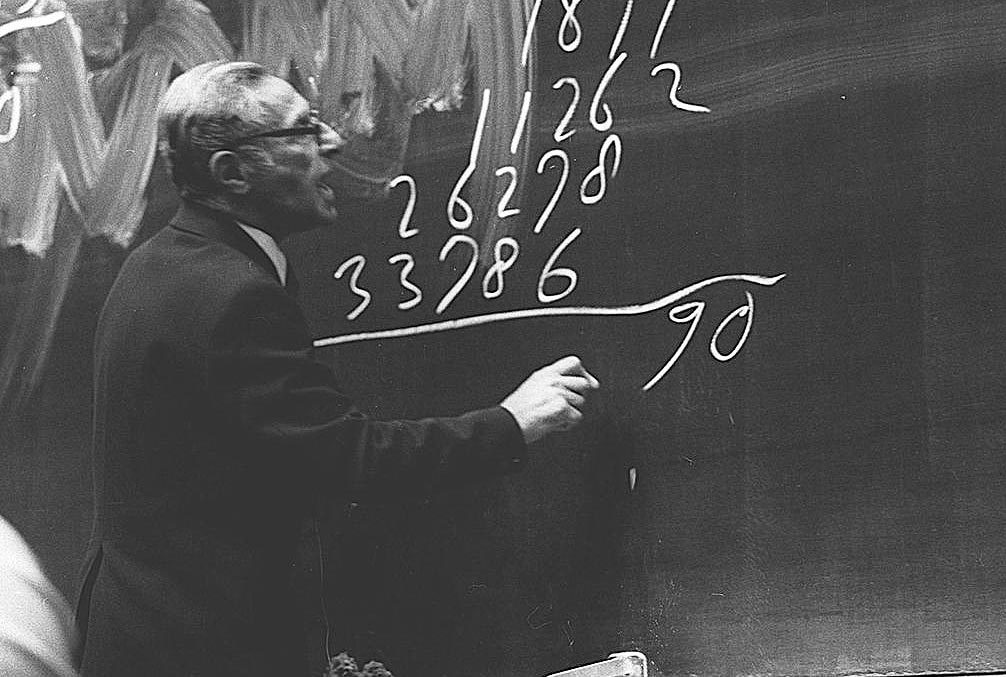
3. Willem Klein (1911–1986)  

Contributions: Known as “Wim Klein, the Human Computer,” he was a mental calculator who performed complex computations, such as finding roots and factorizations, with extraordinary speed. While not a theoretical mathematician, his work at CERN and the University of Amsterdam involved practical applications of mathematical computation, including programming and numerical analysis, during the early computer era.  

 Significance: Klein’s computational feats popularized mathematics and bridged human calculation with emerging computer science. His work at CERN contributed to scientific computations in physics.  

Why Included: His unique contribution as a computational prodigy and his role in applied mathematics at a pivotal time in technology make him a notable figure, though less theoretical than others.

https://en.wikipedia.org/wiki/Willem_Klein

Remembering Wim Klein

Wim Klein shows off his skills during a public lecture at CERN (Image: CERN)

4. Hans Freudenthal (1905–1990)

 Contributions: Freudenthal made significant contributions to algebraic topology, Lie groups, and mathematics education. He developed the Freudenthal Suspension Theorem, which describes the stabilization of homotopy groups, a key result in topology. In education, he founded the “realistic mathematics education” approach, emphasizing intuitive and practical learning, influencing global mathematics curricula.  

Significance: His topological work advanced the understanding of homotopy theory, while his educational reforms transformed how mathematics is taught, particularly in the Netherlands.  

Why Included: His dual impact in pure mathematics and education highlights his versatility and lasting influence.

https://en.wikipedia.org/wiki/Hans_Freudenthal


(Attribution: L.H. Hofland / collectie Het Utrechts Archief)

5. Jan Hogendijk (born 1955)

Contributions: A contemporary mathematician and historian of mathematics, Hogendijk specializes in the history of Islamic mathematics and its transmission to Europe. His work includes detailed studies of medieval mathematicians like Al-Khwārizmī and the geometry of the Banū Mūsā brothers, as well as contributions to the history of Greek and Dutch mathematics.  

Significance: While not a “pure” mathematician in the sense of developing new theorems, his rigorous analyses of historical mathematical texts have clarified the development of algebra and geometry, earning international recognition.  

Why Included: His scholarly work bridges mathematics and its historical context, making him a prominent modern Dutch mathematician.

https://en.wikipedia.org/wiki/Jan_Hogendijk

(Image: https://www.jphogendijk.nl/)

These five Dutch mathematicians—Huygens, Brouwer, Klein, Freudenthal, and Hogendijk—represent a range of contributions from probability and topology to education and historical scholarship, showcasing the Netherlands’ mathematical heritage.

(Note: This post was Grok-assisted.)

Friday, June 6, 2025

Famous Mathematicians of Vietnam


Based on available information and their prominence in global mathematics, here are five notable Vietnamese mathematicians:

Ngô Bảo Châu (b. 1972)

Renowned for proving the fundamental lemma for automorphic forms, he became the first Vietnamese to win the Fields Medal in 2010, often regarded as the highest honor in mathematics. His work has had a significant impact on algebraic geometry, and he is a professor at the University of Chicago.

(Bởi Oberwolfach Photo Collection – https://opc.mfo.de/detail?photo_id=9920, CC BY-SA 2.0 de, https://commons.wikimedia.org/w/index.php?curid=11234718)


Hoàng Xuân Sính (b. 1933)

A pioneering figure, she was the first female mathematics professor in Vietnam and a student of the influential mathematician Alexander Grothendieck. Her work in mathematics education and research during challenging times, including the Vietnam War, has left a lasting legacy.


(https://golem.ph.utexas.edu/category/2022/06/hong_xun_snh.html)


Phạm Tuấn Huy

Recognized as the second Vietnamese mathematician to receive a Clay Research Fellowship, following Ngô Bảo Châu. His contributions to mathematics, though less detailed in public records, mark him as an emerging figure in the global mathematical community.


(https://stanfordsciencefellows.stanford.edu/people/huy-tuan-pham)


Phan Thanh Nam

Honored in 2020 as the first Vietnamese mathematician to receive a prestigious international award (specific details vary), his work in mathematical physics has gained attention, adding to Vietnam’s growing mathematical reputation.


(https://www.mcqst.de/about/members/phan-thanh-nam.html)


Lương Thế Vinh (1441–1496)

A historical scholar and mathematician from the Lê dynasty, he is celebrated in Vietnam for his contributions to mathematics education and problem-solving, including the compilation of mathematical texts that influenced Vietnamese scholarship.

(Bởi Không rõ – http://thltvq1.edu.vn/tin-tuc/index.php?option=com_content&view=article&id=326:tieu-su-luong-the-vinh&catid=103:truyen-thong&Itemid=467, Phạm vi công cộng, https://commons.wikimedia.org/w/index.php?curid=40677055)


Tuesday, June 3, 2025

Famous Brazilian Mathematicians


Brazil has produced many notable mathematicians who have made significant contributions to various fields of mathematics. Below is a list of ten prominent Brazilian mathematicians, based on their recognition, contributions, and impact, as derived from available information. Note that "fame" is subjective, and this list prioritizes those with international recognition, significant awards, or historical importance, while acknowledging that comprehensive data on all Brazilian mathematicians is limited.


1.  Artur Avila (b. 1979)  

   -Field: Dynamical systems, spectral theory, chaos theory.  

   -Notable Achievements: First Latin American to win the Fields Medal (2014), recognized for his work in dynamical systems. His contributions have brought clarity to the field of chaos theory, earning him global acclaim. 

(https://en.wikipedia.org/wiki/Artur_Avila)(https://americasquarterly.org/fulltextarticle/aq-top-5-latin-american-academics-artur-avila/)
(https://twas.org/article/brazilian-artur-avila-wins-twas-lenovo-prize)

   -Why Famous: The Fields Medal, often considered the "Nobel Prize of mathematics," marks him as Brazil’s most celebrated contemporary mathematician.


2. Jacob Palis (1940–2025)

   - Field: Dynamical systems.  

   - Notable Achievements: Internationally recognized for his work in dynamical systems, served as president of the International Mathematical Union, and received numerous awards, including the Balzan Prize.


(https://impa.br/en/notices/morre-matematico-jacob-palis-gigante-da-ciencia-brasileira/)
(https://www.famousfix.com/list/21st-century-brazilian-mathematicians)

   - Why Famous: A giant in Brazilian science, he held influential roles and mentored many mathematicians.


3. Júlio César de Mello e Souza (1895–1974)

   - Field: Mathematics education, recreational mathematics.  

   - Notable Achievements: Known by his pseudonym Malba Tahan, he wrote *The Man Who Counted*, a popular book blending mathematics with storytelling, widely influential in Brazil and beyond.

(https://proofwiki.org/wiki/Mathematician:Mathematicians/Sorted_By_Nation/Brazil)
(https://www.famousfix.com/list/brazilian-mathematicians)

   - Why Famous: His accessible works popularized mathematics in Brazil.


4. Manfredo Perdigão do Carmo (1928–2018)

   - Field: Differential geometry.  

   - Notable Achievements: Renowned for his work in differential geometry, particularly on Riemannian manifolds, and authored influential textbooks used worldwide.

 (https://proofwiki.org/wiki/Mathematician:Mathematicians/Sorted_By_Nation/Brazil)

   - Why Famous: His textbooks and research contributions have a lasting impact on global mathematics education.


5. Elon Lages Lima (1929–2017)

   - Field: Topology, mathematics education.  

   - Notable Achievements**: A leading figure in Brazilian mathematics, he contributed to topology and wrote numerous textbooks that shaped mathematics education in Brazil. 

 (https://proofwiki.org/wiki/Mathematician:Mathematicians/Sorted_By_Nation/Brazil)

   - Why Famous: His educational contributions made him a household name in Brazilian academia.


6. Paulo Ribenboim (b. 1928)

   - Field: Number theory.  

   - Notable Achievements: Known for his work in number theory, particularly on prime numbers and Fermat’s Last Theorem, and authored several influential books.  

(https://proofwiki.org/wiki/Mathematician:Mathematicians/Sorted_By_Nation/Brazil)

   - Why Famous: His extensive publications and international career (notably in Canada) brought him recognition.


7. Fernando Codá Marques (b. 1979)

   - Field: Differential geometry, geometric analysis.  

   - Notable Achievements: Recognized for solving major conjectures in geometric analysis, he received the ICTP Ramanujan Prize and other honors.

(https://www.famousfix.com/list/21st-century-brazilian-mathematicians)(https://www.famousfix.com/list/brazilian-mathematicians)

   - Why Famous: His groundbreaking work has earned him international acclaim among modern mathematicians.


8. Gauss M. Cordeiro (b. 1952)

   - Field: Statistics, probability.  

   - Notable Achievements: Highly cited for his contributions to statistical distributions and regression models, with significant influence in applied mathematics. 

(https://research.com/scientists-rankings/mathematics/br)

   - Why Famous: His prolific research output has made him one of Brazil’s most cited mathematicians.


9. José Mario Martínez (b. 1948)

   - Field: Optimization, numerical analysis.  

   - Notable Achievements**: Known for his work in nonlinear optimization and numerical methods, with applications in computational mathematics.

(https://research.com/scientists-rankings/mathematics/br)

   - Why Famous: His contributions to optimization have practical and academic impact, particularly in Brazil.


10. Luiz Henrique Jacy Monteiro (1918–1975)

    - Field: Algebra, mathematical analysis.  

    - Notable Achievements**: Played a major role in developing Brazilian mathematics in the mid-20th century, particularly through his work at Brazilian universities. 

(https://mathshistory.st-andrews.ac.uk/Biographies/Monteiro/)

    - Why Famous: His foundational contributions helped establish modern mathematics in Brazil.


Notes:  

- This list is curated based on available sources, prioritizing mathematicians with international recognition (e.g., Fields Medal, major awards) or significant influence in Brazil (e.g., educational impact). 

(https://pantheon.world/profile/occupation/mathematician/country/brazil)(https://research.com/scientists-rankings/mathematics/br)(https://proofwiki.org/wiki/Mathematician:Mathematicians/Sorted_By_Nation/Brazil)

- Other notable mathematicians, such as Celso C. Ribeiro, Benar Fux Svaiter, or Welington de Melo, could be included but were less frequently cited in sources for broad fame. 

(https://research.com/scientists-rankings/mathematics/br)(https://www.famousfix.com/list/21st-century-brazilian-mathematicians)

Post and graphic created by Grok.

I apologize for the inaccurate depictions in the title graphic. Below are some photos of the featured mathematicians:

Jacob Palis
(https://upload.wikimedia.org/wikipedia/commons/4/43/Jacob_Palis.jpg)

 Artur  Ávila 
https://commons.wikimedia.org/wiki/File:Artur_%C3%81vila_(cropped).jpg


Júlio César de Melo e Sousa
(https://commons.wikimedia.org/wiki/File:J%C3%BAlio_C%C3%A9sar_de_Melo_e_Sousa.png)


Tuesday, November 5, 2024

Open post to fans of Indian mathamaticians

.

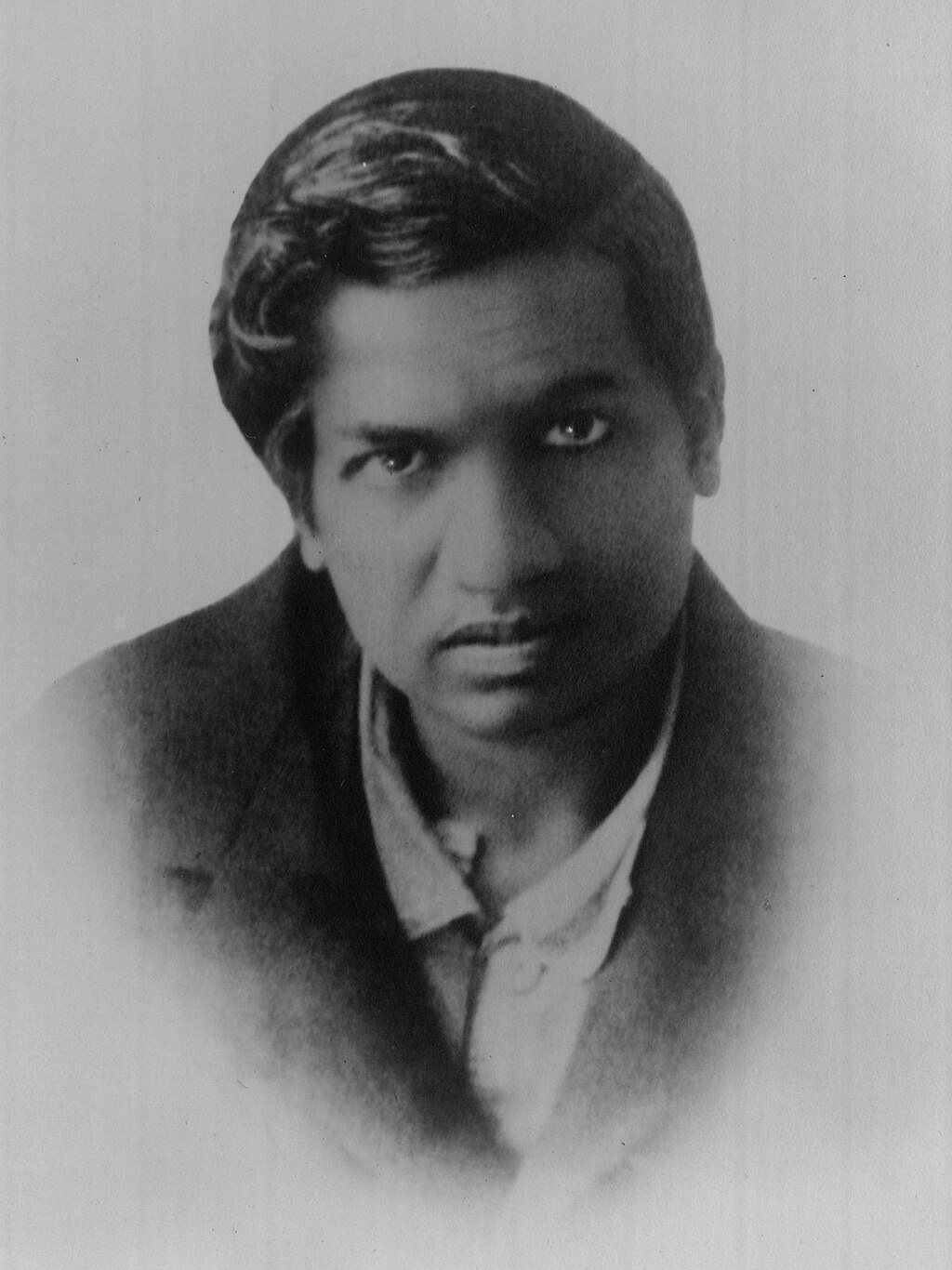
Srinivasa Ramanujan (1887-1920), 
by unknown author - creofire.com (archived from the original), Public Domain, https://commons.wikimedia.org/w/index.php?curid=3911499


(Image: Brahmagupta - credit unknown)  

I'd like readers of this blog to suggest Indian mathematicians, in addition to Ramanujan and Brahmagupta, to be included in the list of the top ten Indian mathematicians of all time. Respond in the Comments.

Wednesday, October 23, 2024

MacMahon and Ramanujan

(Image: Public Domain, https://commons.wikimedia.org/w/index.php?curid=6707227)

(Image: Passport photograph of Ramanujan created in 1913)


As a proud McMahon, I claim relationship to all McMahons and MacMahons (good and bad). In this post, I outline a connection to the great mathematician Srinivasa Ramanujan.

Percy Alexander MacMahon and Srinivasa Ramanujan, though separated by continents and generations, shared a profound connection through their groundbreaking work in combinatorics and number theory. Their lives and contributions intersected in unexpected ways, leaving an indelible mark on the mathematical landscape.

MacMahon, a British mathematician, was a pioneer in the field of combinatorics, the study of counting and arranging objects. His work on partitions of integers, permutations, and symmetric functions laid a solid foundation for future generations of mathematicians. He was known for his meticulous and systematic approach to problem-solving.

Ramanujan, a self-taught Indian mathematician, burst onto the mathematical scene with his extraordinary intuition and ability to produce complex formulas and identities seemingly out of thin air. His work on number theory, infinite series, and elliptic functions was revolutionary, often defying conventional mathematical thinking.

Though their paths never crossed in person, MacMahon and Ramanujan were indirectly connected through their shared interest in combinatorics. Ramanujan's work on partitions of integers, for example, was closely related to MacMahon's research. In fact, Ramanujan's formulas for the number of partitions of integers were later proved and refined by MacMahon and other mathematicians.

Ramanujan's unconventional style and unorthodox methods sometimes clashed with the more traditional approach of mathematicians like MacMahon. However, MacMahon recognized Ramanujan's extraordinary talent and supported his work. He helped to bring Ramanujan to England and provided him with the resources and intellectual stimulation he needed to thrive.

The relationship between MacMahon and Ramanujan is a testament to the power of mathematical collaboration and the importance of recognizing and nurturing exceptional talent. Their work continues to inspire and influence mathematicians today, and their legacies will endure for generations to come.

Thursday, September 26, 2024

Happy Anniversary Rule 30


(Image: By Richard Ling - Own work; Location: Cod Hole, Great Barrier Reef, Australia, CC BY-SA 3.0, https://commons.wikimedia.org/w/index.php?curid=293495)

This year my wife and I are celebrating our 40th anniversary. This year Stephen Wolfram also celebrates the 40th anniversary of his favorite scientific discovery as he wrote in My All-Time Favorite Science Discovery

Also, see a prior post -https://www.blogger.com/blog/post/edit/8711601538345502519/636715033944644578.

This discovery led to Wolfram's publication of A New Kind of Science (now available online).

More on cellular automata: Triangular Automata.


Friday, July 5, 2024

Robert Recorde and an Early Multiplication Method


16th century mathematician, Robert Recorde, wrote a books on mathematics. Roman Numerals were used commonly up to his time and he wrote of the advantages of used our current Hindu-Arabic numerals. He introduced a method of multiplication. The method works best for multiplying single-digit numbers, but it also works for higher numbers. 

For example, consider 9 x 7:

Write down the following diagram. The numbers being multiplied are written on the left-hand side of the X; their 10s complements are written on the right-hand side (10-9=1 and 10-7=3):

The right-hand side gives the value of the ones digit of the answer: the product of 1x3. The value of the tens digit is given by the difference of numbers on opposite sides of the X. Both 7-1=6 and 9-3=6, so it doesn't matter which difference is used. Therefore, the final answer is 63 (6x10 +3).

Here is an example with higher numbers. Consider 13 x 7. On the right-hand side of the X, write -3 and 3 (10-13= - 3, and 10-7=3):


The ones unit is -3 x 3 = -9 and the tens digit is 10 which is found by the difference of 13 and 3. So the final answer is 10 tens or 100 -9 = 91.

A little algebra will explain how this X method works. Let the two numbers being multiplied be a and b. The left-hand side of the X becomes a and b, while the right-hand side is 10-a and 10-b.


Multiplying the right-hand side of the X, (10-a)x(10-b)=100-10a-10b+ab.

Next take the difference of the opposite sides of the X. This gives us a-(10-b) for the tens unit so we multiply this difference by 10 for 10a-100+10b. Adding this result to the product of the right-hand side gives: 10a-100+10b+100-10a-10b+ab. Note the following terms cancel: 10a & -10a, -100 & 100, and 10b & -10b, leaving the ab as the answer to a times b. 

The math series, Numberphile, recently had a video with Rob Eastaway. He shows one of Recorde's books and walks through the X multiplication method: https://www.youtube.com/watch?v=21Ho32fAEEM.


Monday, May 27, 2024

Guinness Beer and Statistics


(Image: https://www.iconfinder.com/search/icons?family=ionicons-fill )

Student's t-test is a common statistical test using the t-distribution developed by William Gosset. William Gosset. Gosset worked at the Guinness brewery in Dublin and his employer preferred that staff use pen names when publishing scientific papers, so in 1908 he published under the pseudonym, Student, when his work was published in the journal, Biometrika.

The t-distribution is used when one has small sample sizes. The distribution has a bell-shape like the normal distribution but is wider at the tails. 

In May, 2024, Scientific America published an opinion piece about this important contribution to the field of statistics: How the Guinness Brewery Invented the Most Important Statistical Method in Science: How the Guinness Brewery Invented the Most Important Statistical Method in Science.

Friday, May 24, 2024

Proving the Existence of God


(Image: https://www.iconfinder.com/ekarifqi001)


I recently read an article about Kurt Gödel's proof of the existence of God. This blog has included other posts about religious mathematicians, including: 

https://jamesmacmath.blogspot.com/2023/12/book-review-zero-biography-of-dangerous.html

https://jamesmacmath.blogspot.com/2023/10/how-does-math-formula-highlight-creator.html

https://jamesmacmath.blogspot.com/2023/09/anniversary-of-eulers-death.html

https://jamesmacmath.blogspot.com/2022/09/alec-wilkinson-staff-writer-for-new.html

https://jamesmacmath.blogspot.com/2022/02/perfect-number-generator.html

https://jamesmacmath.blogspot.com/2022/01/maths-true-source-man-or-nature.html

https://jamesmacmath.blogspot.com/2020/05/george-lemaitre-and-big-bang.html

https://jamesmacmath.blogspot.com/2020/05/thomas-bayes-attempt-to-prove-existence.html


I had a goal of writing a post that summarizes these many theories, however, during my research, I found an article by Manon Bischoff in Scientific American that already has a very good summary. It includes many of the theories of the scientists and mathematicians from the above links and the summary of Kurt Gödel's proposed proof. I recommend readers of this blog to his article.

Thursday, May 9, 2024

Unification of Different Fields of Mathematics

(Image: https://www.iconfinder.com/roywj)


During WWII, André Weil proposed an idea for linking three fields of mathematics: number theory, geometry, and finite fields.

For the full story, please see the following link it Quanta Magazine's  article describing the unification of three major branches of mathematics: A Rosetta Stone of Mathematics. 

Also related, is the work begun by Robert Langlands, known as the Langlands program.

Thursday, March 28, 2024

Hongkonger Mathematicians

(Image: https://www.iconfinder.com/search/icons?family=flagikon)

This is a short list of famous Hongkonger mathematicians. I invite readers to suggest more.

Shing-Yung Yau (1982 Fields Prize recipient): https://en.wikipedia.org/wiki/Shing-Tung_Yau

Tony F. Chan: https://en.wikipedia.org/wiki/Tony_F._Chan

Tsit Yuen Lam: https://en.wikipedia.org/wiki/Tsit_Yuen_Lam

Lai-Sang Young: https://en.wikipedia.org/wiki/Lai-Sang_Young

Update (4/3/2024): Please see my recent post of The Periodic Table of Primes. If this approach to predicting primes numbers works, there will additional mathematicians to add to this list.


Wednesday, January 31, 2024

Take a tour of the Mandelbrot Set


 (Image: Created by Wolfgang Beyer with the program Ultra Fractal 3. - Own work)


The Mandelbrot set is a two-dimension set that is described by a relatively simple equation, yet it produces a very complex design. In 1980,  Benoit Mandelbrot made high-quality visualizations of the set, named after him, while working at IBM's Thomas J. Watson Research Center. Quantamagazine published a very thorough history of the study of the Manelbort set. In that article, a YouTube video was included that explores its un-ending complexity and many interesting features.

You can view it here: A Long Zoom Into the Mandelbrot Set.

I also recommend this video: The Mandelbrot Set.

An Open Message to the Blog's Fans in Singapore

(Image:  Free 12 singapore icons - Iconfinder ) This past week, more views of this blog were made from Singapore than other country. To ackn...

Popular in last 30 days