
(Image: Gemini G.E.L. (@GeminiGEL) / X)
Here is a story to convince math enthusiasts to continue to work on problems regardless of their age:
Related posts:
Here is a story to convince math enthusiasts to continue to work on problems regardless of their age:
Related posts:
 Adjunct faculty member of the University of Redlands, School of Business.
Retired Quality Engineering Manager - Abbott Labs (32 years).
Favorite classes to teach: Management Science, Statistics, Operations Management, Analytics.
Contributor to the Online Encyclopedia of Integer Sequences (OEIS) https://oeis.org/.

I recently proposed a new sequence for the On-Line Encyclopedia of Integer Sequences (OEIS).
A Sisyphus sequence: a(0) = 0, a(1) = 1, a(2) = 2; for n > 2, a(n) is the smallest unused positive integer having the same greatest prime factor as the sum of the previous terms.
Sisyphus is a figure in Greek mythology, known as the cunning King of Corinth who was punished by Zeus to eternally roll a massive boulder up a hill in Tartarus, only for it to roll back down each time. Numerical sequences are sometimes called Sisyphus sequences when their terms climb and climb, but then drop repeatedly.
The image above shows this process for this sequence for the first 10^6 terms. Below is a graph for how the sequence begins (first 300 terms):

 Adjunct faculty member of the University of Redlands, School of Business.
Retired Quality Engineering Manager - Abbott Labs (32 years).
Favorite classes to teach: Management Science, Statistics, Operations Management, Analytics.
Contributor to the Online Encyclopedia of Integer Sequences (OEIS) https://oeis.org/.
Adjunct faculty member of the University of Redlands, School of Business.
Retired Quality Engineering Manager - Abbott Labs (32 years).
Favorite classes to teach: Management Science, Statistics, Operations Management, Analytics.
Contributor to the Online Encyclopedia of Integer Sequences (OEIS) https://oeis.org/.

A recent post about Julius Caesar introduced the concept of Caesar Primes. Caesar's birthday is the 13th of July (the 7th month), and 137 is a prime number. Caesar Primes are primes formed by the concatenation of q and p, where q > p are also primes.
As we celebrate Saint Patrick's Day on March 17, we note that 317 and 173 are prime numbers. This suggests a sequence of primes similar to the Caesar Primes. Other pairs of primes formed by two primes include: {37, 73}, {113, 311}, {313,331},{337,733}, {359,593}...
Update 4/8/2025. I submitted a proposed sequence to the On-Line Encyclopedia of Integer Sequences (OEIS). It is currently under review as https://oeis.org/draft/A380943, Primes written in decimal representation by the concatenation of primes p and q such that the concatenation of q and p also forms a prime.
The sequence begins: 37, 73, 113, 173, 197, 311, 313, 317, 331, 337, 359, 367, 373, 593, 617, 673, 719, 733, 761, 797, 977, 1093, 1097, 1123, 1277, 1319, 1361, 1373, 1783, 1913, 1931, 1979, 1997, 2293, 2297, 2311, 2347, 2389, 2713, 2837, 2971, 3109, 3119, 3137, 3191, 3229, 3271...
Update 4/13/2025 - the proposed sequence was published in the OEIS: https://oeis.org/A380943.
Adjunct faculty member of the University of Redlands, School of Business.
Retired Quality Engineering Manager - Abbott Labs (32 years).
Favorite classes to teach: Management Science, Statistics, Operations Management, Analytics.
Contributor to the Online Encyclopedia of Integer Sequences (OEIS) https://oeis.org/.

March 15 is also known as the Ides of March, when Julius Caesar was assassinated in 44 BCE. Caesar was born on July 12 or 13, 100 BCE (records vary on the date of July 12 or July 13). For the purpose of this post, July 13 is consistent with the numbers known as Caesar Primes. One such number is 137 - the concatenation of two primes, 13 and 7 (with Caesar's birthday being the 13th day of the 7th month).
The list of Caesar Primes is found in the On-Line Encyclopedia of Integer Sequences (OEIS) as sequence: https://oeis.org/A133187. The sequence consists of the prime numbers formed by the concatenation of q and p, where q > p are also primes.
I wrote a Mathematica to produce this sequence:
lim=2700;plim=Max[FromDigits[Rest[IntegerDigits[lim]]],FromDigits[Drop[IntegerDigits[lim],-1]]];f2p[{p_,q_}]:=FromDigits[Join[IntegerDigits[q],IntegerDigits[p]]];p=Prime[Range[PrimePi[plim]]];p2=Subsets[p,{2}];Union[Select[f2p/@p2,PrimeQ[#]&&#<=lim&]]
The first 46 Caesar Primes are: 53, 73, 113, 137, 173, 193, 197, 233, 293, 313, 317, 373, 433, 593, 613, 617, 673, 677, 733, 797, 977, 1013, 1033, 1093, 1097, 1277, 1373, 1493, 1637, 1733, 1913, 1933, 1973, 1993, 1997, 2113, 2237, 2273, 2293, 2297, 2311, 2333, 2393, 2417, 2633, 2693.
Adjunct faculty member of the University of Redlands, School of Business.
Retired Quality Engineering Manager - Abbott Labs (32 years).
Favorite classes to teach: Management Science, Statistics, Operations Management, Analytics.
Contributor to the Online Encyclopedia of Integer Sequences (OEIS) https://oeis.org/.

Recently proposed for the On-Line Encyclopedia of Integer Sequences (OEIS) is the sequence:
a(1) = 2, a(2) = 3; thereafter, a(n) = a(n-1) + (sum of prior prime terms or whose negatives are prime) - (sum of prior composite terms or whose negatives are composite).
The sequence starts: 2, 3, 8, 5, 7, 16, 9, -7, -30, -23, -39, -16, 23, 85, 62, -23, -131... and continues to cycle through negative and positive integers. Although the sequence is not periodic, it does repeat terms. For example, the term 347 (or its negative) occurs nine times in the first 48 terms. The 418th (or its negative) occurs 71 times in a span of 211 terms.
My colleague, Michael De Vlieger, produced the graphic showing the sequence's progression shown above.
If approved, the sequence will become A381150. Currently, it is still in draft form: https://oeis.org/A381150.
Update: The sequence was published 2/25/2025.
 Adjunct faculty member of the University of Redlands, School of Business.
Retired Quality Engineering Manager - Abbott Labs (32 years).
Favorite classes to teach: Management Science, Statistics, Operations Management, Analytics.
Contributor to the Online Encyclopedia of Integer Sequences (OEIS) https://oeis.org/.
Adjunct faculty member of the University of Redlands, School of Business.
Retired Quality Engineering Manager - Abbott Labs (32 years).
Favorite classes to teach: Management Science, Statistics, Operations Management, Analytics.
Contributor to the Online Encyclopedia of Integer Sequences (OEIS) https://oeis.org/.

There was a recent article about asking people to name a prime number. One answer was given as 2^31-1; however, the responder was asked to recite the digits. He couldn't remember the digits of 2^31-1, which are 2,147,483,647. His friend, Neil Sloane, offered another large prime: 12,345,678,910,987,654,321. It is easy to remember because one just needs to count from 1 to 10 and then back down to 1. The original story is recounted in this Scientific American article: These Prime Numbers Are So Memorable That People Hunt for Them.
The number cited above is found in the OEIS sequence A350153.
Other related sequences are:
A048847, Primes formed by concatenation of first k odd numbers.
Adjunct faculty member of the University of Redlands, School of Business.
Retired Quality Engineering Manager - Abbott Labs (32 years).
Favorite classes to teach: Management Science, Statistics, Operations Management, Analytics.
Contributor to the Online Encyclopedia of Integer Sequences (OEIS) https://oeis.org/.
In a significant advancement for number theory, mathematicians Ben Green of the University of Oxford and Mehtaab Sawhney of Columbia University have introduced a novel method for identifying specific types of prime numbers. Their work, detailed in a recent Quanta Magazine article, focuses on primes that can be expressed in the form p² + 4q², where both p and q are prime numbers.
Prime numbers, defined as numbers greater than 1 that have no positive divisors other than 1 and themselves, are fundamental to mathematics. Understanding their distribution has been a longstanding challenge. While the infinitude of primes was established by Euclid around 300 BCE, identifying primes that satisfy additional constraints has proven difficult. Green and Sawhney's achievement in proving the existence of infinitely many primes of the form p² + 4q² represents a significant breakthrough in this area.
Their approach diverged from traditional methods by incorporating tools from other mathematical disciplines, demonstrating the potential for interdisciplinary techniques to address complex problems in number theory. This innovative strategy not only resolved a specific conjecture but also opened avenues for applying similar methods to other mathematical challenges.
The implications of this discovery extend beyond the immediate result. By enhancing our understanding of prime distribution, it contributes to the broader field of analytic number theory and may influence related areas such as cryptography, where prime numbers play a crucial role.
For a more comprehensive exploration of Green and Sawhney's work and its significance, the full article is available on Quanta Magazine's website.
Adjunct faculty member of the University of Redlands, School of Business.
Retired Quality Engineering Manager - Abbott Labs (32 years).
Favorite classes to teach: Management Science, Statistics, Operations Management, Analytics.
Contributor to the Online Encyclopedia of Integer Sequences (OEIS) https://oeis.org/.
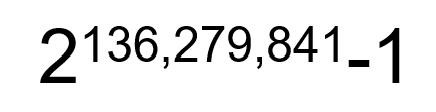
New Record-Breaking Prime Number Discovered
Mathematicians have discovered a new record-breaking prime number, the largest known prime to date. The number, 2^136,279,841-1, is a Mersenne prime, a type of prime number that is one less than a power of two.
The discovery was made by the Great Internet Mersenne Prime Search (GIMPS), a distributed computing project that uses volunteers' computers to search for Mersenne primes. The new prime was found by a volunteer in the United States.
The previous record for the largest known prime number was held by 2^77,232,917-1, which was discovered in 2018. The new prime is more than twice as large as the previous record holder.
The discovery of new prime numbers is important for several reasons. First, they are used in cryptography, which is the science of secure communication. Second, they are used in number theory, a branch of mathematics that studies the properties of numbers. Third, they are simply interesting in their own right.
The discovery of the new prime number is a major milestone for the GIMPS project. It is also a testament to the power of distributed computing. By harnessing the power of thousands of volunteers' computers, GIMPS has been able to make significant contributions to the field of mathematics.
What is a Mersenne Prime?
A Mersenne prime is a prime number that is one less than a power of two. In other words, it is a number of the form 2^n - 1, where n is a positive integer.
Mersenne primes are named after Marin Mersenne, a French monk who lived from 1588 to 1648. Mersenne studied these numbers and made a list of all the Mersenne primes up to 2^257 - 1. However, his list was not entirely correct.
Since Mersenne's time, many more Mersenne primes have been discovered. The largest known Mersenne prime is 2136,279,841-1.
Why are Mersenne Primes Important?
Mersenne primes are important for several reasons. First, they are used in cryptography. The RSA cryptosystem, which is one of the most widely used public-key cryptosystems, uses large prime numbers, including Mersenne primes.
Second, Mersenne primes are used in number theory. Number theorists study the properties of Mersenne primes and other types of prime numbers.
Third, Mersenne primes are simply interesting in their own right. They are a fascinating example of a mathematical pattern that has been studied for centuries.
Great Internet Mersenne Prime Search (GIMPS)
The Great Internet Mersenne Prime Search (GIMPS) is a distributed computing project that uses volunteers' computers to search for Mersenne primes. The project was founded in 1996 by George Woltman.
GIMPS has discovered several Mersenne primes, including the largest known Mersenne prime, 2136,279,841-1. The project is a great way for people to contribute to mathematics and science.
If you are interested in learning more about Mersenne primes or the GIMPS project, I encourage you to visit the GIMPS website at
News about this recently discovered prime:
Numberphile video: https://www.numberphile.com/videos/man-who-found-the-worlds-biggest-prime
Determining if a very large number is Prime:
https://www.scientificamerican.com/article/how-to-identify-a-prime-number-without-a-computer/
Adjunct faculty member of the University of Redlands, School of Business.
Retired Quality Engineering Manager - Abbott Labs (32 years).
Favorite classes to teach: Management Science, Statistics, Operations Management, Analytics.
Contributor to the Online Encyclopedia of Integer Sequences (OEIS) https://oeis.org/.
(Image: By Unknown author - http://santuarioeucaristico.blogspot.hu/2010/08/sao-maximiliano-kolbe-14-de-agosto.html, Public Domain, https:...


